Friday, June 30, 2017

Ethiopia in the Korean War


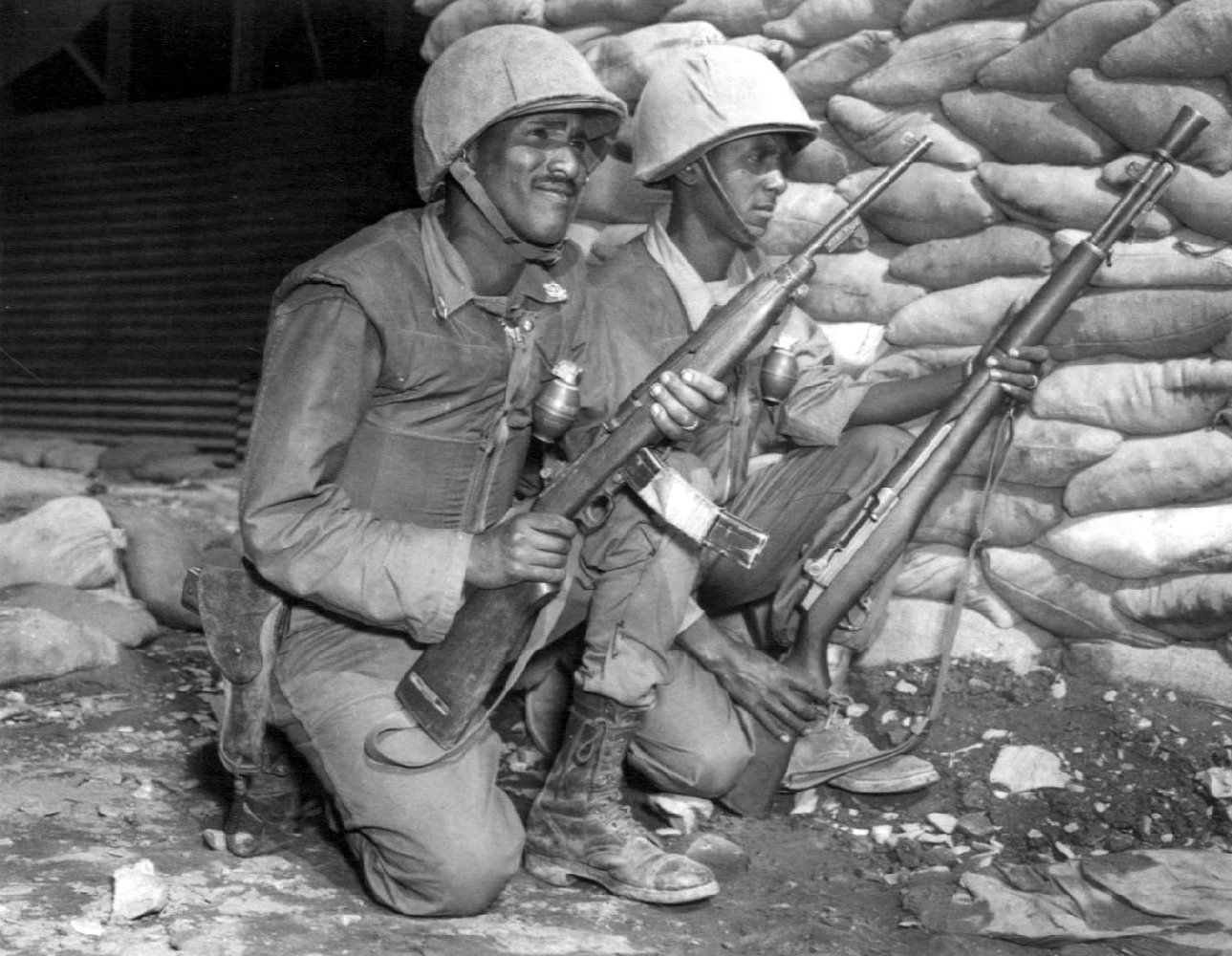
In total, 16 nations applied troops to the United Nations forces involved in the Korean War. Ethiopia was the only African nation to do so, supplying 6,037 soldiers in total. When the Korean War began Emperor Hailie Selassie sent a battalion of troops from his own elite Imperial Guard Division known as the Kagnew Battalion, named after the warhorse of Hailie Selassie's father Makonnen Wolde Mikael. The Kagnews served with great distinction throughout war, notably being the only contingent that had no prisoners to collect from the North Koreans following the armistice, since no Kagnew soldier ever surrendered. This coupled with the fact that the battalion never left their dead behind, always retrieving the bodies of their fallen led the North Koreans, who had never seen Africans before, to believe that the Ethiopians had superhuman powers and could not be killed.

In total 121 Ethiopians were killed in the Korean War and 536 received injuries. Even after the armistice, a token Ethiopian force remained in the country until 1965. When the Communist Derg took control of Ethiopia in 1974, they did their best to erase all records of the Kagnew Battalion, but since their fall research in the battalion has grown.


Thursday, June 29, 2017

Katherine Cross - Murdered By Human Wolves


In Konawa Cemetery in Konawa, Oklahoma; a barely legible tombstone bears an unusual epitaph, "Murdered by human wolves." Little is known about the life of Katherine Cross other than what is on her tombstone. She was born March 13th, 1899 to J.T and M.K Cross, and died October 13th, 1917 at age 18. The odd cause of death on her tombstone has caused numerous local legends to arise over her death, such as she was killed by members of the KKK or by actual werewolves. In actually her real cause of death is likely something more mundane but more tragic. Examination of contemporary newspapers notes that Cross died in the care of Dr. A.H. Yates and his assistant Fredrick O'Neal, with her cause of death listed as a "criminal operation." The wording of this prognosis and her location suggests that a more likely cause of death was injuries sustained in a botched abortion. While the headstone was stolen in July 2016, the grave of Katherine Cross, murdered by human wolves, still remains in Konawa Cemetery.

Wednesday, June 28, 2017

The White Panther Party


Founded in 1968, the White Panther Party was a far-left, anti-racist coalition formed to serve as an organization for white supporters of the Black Panthers. Started by Michigan activists Pun Plamondon, Leni Sinclair, and John Sinclair, the group listed their goals as follows:

  1. We want freedom. We want the power for all people to determine our own destinies.
  2. We want justice. We want an immediate and total end to all cultural and political repression of the people by the vicious pig power structure and their mad dog lackies the police, courts and military. We want the end of all police and military violence against the people all over the world right now!
  3. We want a free world economy based on the free exchange of energy and materials and the end of money.
  4. We want free access to all information media and to all technology for all the people.
  5. We want a free educational system, utilizing the best procedures and machinery our modern technology can produce, that will teach each man, woman and child on earth exactly what each needs to know to survive and grow into his or her full human potential.
  6. We want to free all structures from corporate rule and turn the buildings over to the people at once!
  7. We want free time and space for all humans—dissolve all unnatural boundaries!
  8. We want the freedom of all prisoners held in federal, state, county or city jails and prisons since the so-called legal system in Amerika [sic] makes it impossible for any man to obtain a fair and impartial trial by a jury of his peers.
  9. We want the freedom of all people who are held against their will in the conscripted armies of the oppressors throughout the world.
  10. We want free land, free food, free shelter, free clothing, free music, free medical care, free education, free media, EVERYTHING FREE FOR EVERYBODY!

The groups two greatest legal successes were United States v. United States District Court (1972), which held government officials were obligated to obtain a warrant before beginning electronic surveillance even if domestic security issues were involved; and People v. Sinclair (1972), which briefly decriminalized marijuana in Michigan. The group dissolved in the 1980s, with its members joining other leftist or reform groups

Tuesday, June 27, 2017

The Ghost Cow of Griggstown


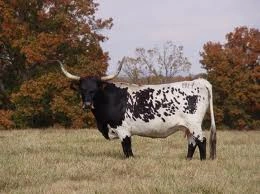
Beginning around the 1970s, a legend began to spread around the small community of Griggstown, New Jersey. It was said that on foggy nights or evenings, a ghostly white cow could be seen in the wandering the areas around the Millstone River floodplain and Griggstown. Sighted for only a few quick seconds and disappearing without a trace, the Griggstown Cow became a local ghost story and joke.

That changed November 23, 2002, when an employee of the New Jersey Water Authority phoned the local parks department to say that he had found a bull stuck in a ravine. When employees of the Griggstown fire department, the State Park, and the New Jersey Fish and Wildlife service arrived, they found an old, sickly, blind white bull. It is now believed that the cow had escaped from a local farm in the 1960s or 1970s, living feral in the wild long after all the dairy farms in the area closed. Now incredibly old, it had stumbled into a pit and was too weak to escape.

Efforts were made to extract the bovine, and rescuers managed to hoist the bull onto level ground. Unfortunately, the animal was extremely weak. A local veterinarian determined he was in poor health and nothing could be done, and it was decided to euthanize the animal. The Ghost Cow of Griggstown was buried not far from the Griggstown lock, near his home and is still a part of New Jersey folklore.

Monday, June 26, 2017

The Israeli Black Panthers


When the state of Israel was first founded in 1948, the majority of its Jewish inhabitants were Ashkenazi Jews, hailing from the Jewish communities in Central and Eastern Europe. However, in the ensuing decades, an increasing number of Jews immigrating to the nation were from the Sephardic (Iberian, North African, and Turkish) and Mizrahi (Middle Eastern, Central Asian, and South Asian) Jewish communities. These new immigrants, particularly those from Arabic speaking or Muslim nations, were looked upon with suspicion as they continued to practice their own traditions and speak their own languages rather than assimilate into the mainstream Israeli, or rather, Ashkenazi culture.

As a result of this discrimination, young Sephardic and Mizrahi Israelis began to look to the actions of the African-American Civil Rights Movement, particularly the Black Panthers. In 1971, the Black Panthers, also called HaPanterim HaShhorim or the Isreali Black Panthers, was formed to protest the poverty and ethnic discrimination they faced in Isreali society. Although denied a permit to protest, the group still held one on May 18th, 1971 in Zion Square, Jerusalem, attracting between 5,000 and 7,000 demonstrators. The subsequent clash with the police left 20 hospitalized and 74 arrested. Despite facing stiff resistance from the government, including Prime Minister Golda Meir, the Black Panthers eventually succeed in having the movement take steps to confront issues of inequality and discrimination, as well as electing members to Congress.

Although the Israeli Black Panthers began to decline in the 1980s, their legacy remains. Although African and Middle Eastern Jews continue to face discrimination, an increasing number have entered the mainstream of Israeli political, military, cultural and economic life. Further, in the 1990s and 2000s, a group called the Russian Black Panthers was formed to protest discriminating and hate crimes directed at Russian-speaking immigrants.

Sunday, June 25, 2017

Will West and William West: The Origin of Fingerprinting in Prisons


In 1903, Will West (top) was admitted to Leavenworth Prison, Kansas. As was the process of the time, West's photo was taken and his Bertillon measurements were taken. Devised by French policeman Alphonse Bertillon, these measurements recorded a criminal's (1) head length; (2) head breadth; (3) length of the middle finger; (4) the length of the left foot; (5) the length of the "cubit" (the forearm from the elbow to the extremity of the middle finger); as a way fo identifying them.  Upon the completion of this, it was discovered that Will West was virtually identical to an unrelated prisoner already being held: William West (bottom). In order to correctly differentiate the prisoners, the guards decided to use the relativly new idea of fingerprinting the inmates. Soon fingerprinting would replace the Bertillon measurements in identifying criminals around the world.

Weird and Fun History

Weird and Fun History is a sporadically updated blog dedicated to weird, funny, or little-known events in history.